

A few years ago, Hong Kong appeared to be entering a prolonged decline. The pandemic had isolated the territory, the National Security Law had accelerated the departure of part of its professional class, and China’s property crisis was weighing on an economy built around finance, trade and real estate. The question was whether Hong Kong could recover the openness that had made it prosperous, or whether its economic model had disappeared alongside much of its political exceptionalism.
The recovery is now difficult to ignore. Hong Kong’s economy expanded by 5.1 per cent in the first half of 2026, its strongest half-year performance in almost five years. Merchandise exports increased by 42.5 per cent during the first eight months, supported by international demand for AI-related electronics. Capital markets have rebounded even more dramatically: by September, 118 companies had raised approximately HK$388 billion (US$50 billion) through initial public offerings, more than double the amount raised during the corresponding period in 2025. Technology companies, particularly those operating across the AI, semiconductor and advanced manufacturing value chains, have been central to this resurgence.
Yet this is not the restoration of the Hong Kong that existed before 2020. The city is re-emerging with a different relationship to China, a more interventionist state and a deliberate industrial ambition. In September 2026, the government unveiled its first Five-Year Plan for Economic and Social Development, aligning its priorities with China’s national planning framework. For a territory historically associated with market-led development, the shift is significant.
The interesting question is therefore not whether Hong Kong is back. It is what Hong Kong is becoming, and whether its new position within China’s industrial ecosystem can generate a different form of international competitive advantage.
From financial intermediary to industrial orchestrator
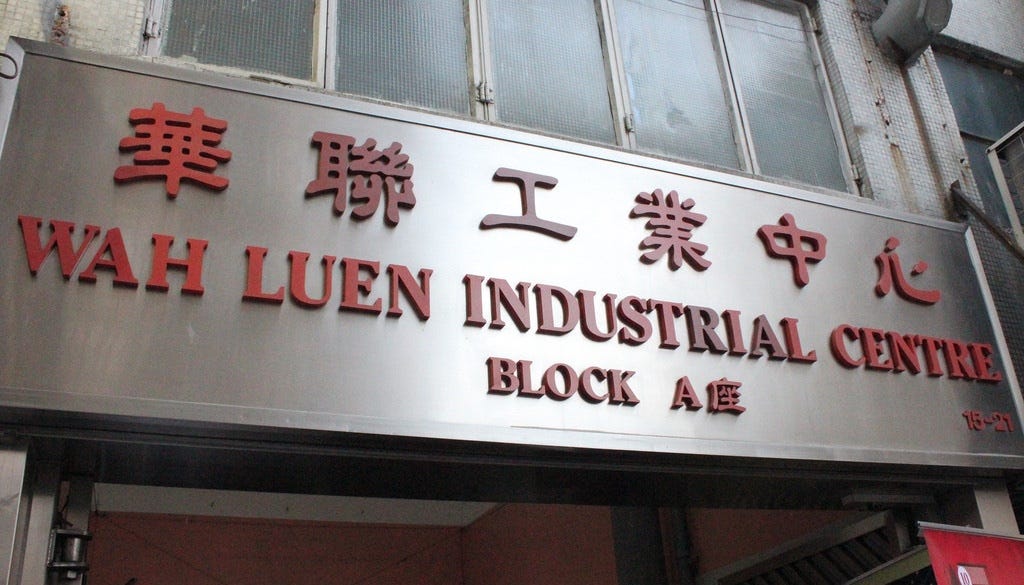
For much of its modern history, Hong Kong prospered by standing between economic systems. It connected Chinese manufacturers with international customers, mainland companies with foreign capital, and global investors with opportunities that were otherwise difficult to access. Its competitive advantage lay less in producing technology than in reducing the frictions associated with trade, finance and cross-border ownership.
That proposition has not disappeared, but its geography has changed. Hong Kong’s economic centre of gravity has moved decisively towards mainland China. The government’s new planning framework formalises this evolution, placing greater emphasis on integration with the Greater Bay Area and the development of technology-intensive industries. The Northern Metropolis project, along the Shenzhen border, is intended to bring research institutions, advanced production facilities and commercial infrastructure into a more integrated economic geography.
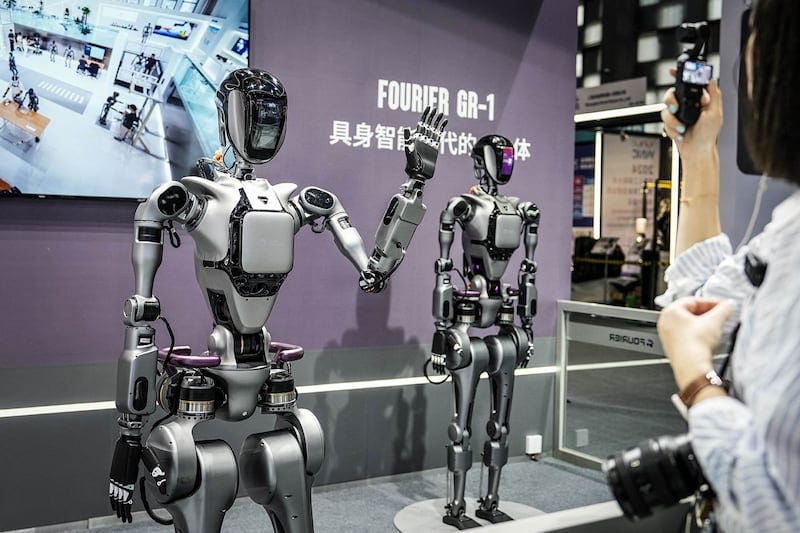
For frontier technology, this is more than an administrative realignment. A robotics company may require university research, specialised components, pilot customers and contract manufacturing. Semiconductor ventures depend on fabrication and packaging capabilities that few startups can reproduce. Biotechnology requires clinical infrastructure, regulatory expertise and specialised production facilities. These capabilities rarely coexist within a single jurisdiction.
Hong Kong cannot recreate them all, nor does it need to. Its opportunity lies in orchestrating capabilities distributed across the region: research and company formation in Hong Kong, engineering and manufacturing across Shenzhen and the wider Greater Bay Area, and access to international capital through Hong Kong’s financial markets. In this model, the border becomes part of the venture architecture rather than merely a constraint.
This also explains the government’s increasingly active role. Hong Kong has introduced three separate HK$10 billion programmes supporting academic research commercialisation, advanced manufacturing infrastructure and public investment intended to attract private capital into strategic industries. Rather than simply providing favourable market conditions, the government is attempting to coordinate the transition from scientific discovery to industrial production.
The economic rationale is understandable. Deep-tech ecosystems face coordination problems that private capital alone cannot always resolve. Research institutions, industrial customers, specialised infrastructure and long-duration financing must develop in parallel, even when no individual participant can capture the full benefits of investing first.
But coordination is not the same as competitiveness. Public funding can accelerate industrial development; it cannot substitute indefinitely for technological differentiation, manufacturing efficiency or commercial demand. Hong Kong’s challenge is to combine the advantages of industrial policy with the entrepreneurial experimentation and capital discipline that historically distinguished its economy.
The missing layer between science and industrial capital
Hong Kong has never lacked scientific capability. Its universities conduct internationally recognised research in AI, biotechnology, robotics, materials science and electronics. Its more persistent weakness has been converting that research into companies capable of reaching industrial and commercial scale.
This is a familiar problem in frontier technology. Scientific excellence creates technological possibilities, but not necessarily viable businesses. A discovery must become a reliable product, achieve acceptable manufacturing economics, navigate regulatory processes and secure adoption within existing industrial systems. Each transition introduces different risks, capital requirements and institutional dependencies.
Traditional venture capital is not always well suited to this progression. Fund lifecycles and follow-on financing assumptions were largely developed around businesses that could scale without factories, laboratories or lengthy qualification cycles. Industrial technologies often require a different combination of research funding, venture equity, strategic investment, project financing and access to public markets.
Hong Kong is beginning to assemble a more credible financing continuum. Chapter 18C of the Hong Kong Stock Exchange’s listing rules allows specialist technology companies, including qualifying pre-commercial businesses, to access public markets under conditions adapted to their development stage. In the first half of 2026, 13 companies raised approximately US$3.8 billion through the regime, bringing cumulative fundraising to nearly US$5 billion across 21 listings since its introduction in 2023. Another 14 companies had active applications by the end of June. (HKEX)
The emergence of listed AI developers such as MiniMax and Zhipu AI, alongside semiconductor and robotics companies, illustrates Hong Kong’s growing capacity to finance businesses whose economic value depends on substantial technological investment and uncertain paths to profitability.
This matters beyond individual IPOs. A credible public-market exit mechanism changes the economics of earlier-stage investment, potentially expanding the pool of capital available to companies before commercial maturity. Combined with government-backed programmes and the Greater Bay Area’s industrial infrastructure, Hong Kong could connect stages of technological development that remain fragmented in many other ecosystems.
Yet the distinction between financing technological ambition and financing industrial execution remains critical.
The AI investment cycle has accelerated Hong Kong’s recovery, but it may also obscure its limitations. Much of the city’s recent trade growth reflects electronic products moving through its commercial networks rather than technologies developed locally. Similarly, strong demand for AI-related equities does not automatically create the capabilities required to manufacture advanced sensors, industrial robotics or semiconductor equipment.
The difficult middle of the deep-tech journey remains the decisive test: financing companies after scientific feasibility has been established, but before manufacturing economics, regulatory approval or commercial adoption have been demonstrated.
Talent presents a related ambiguity. Hong Kong has attracted substantial numbers of professionals through targeted admission programmes, with mainland Chinese applicants representing the majority of successful candidates. This strengthens connections with Shenzhen’s entrepreneurial ecosystem, but international scientific collaboration and access to diverse talent remain essential to frontier innovation.
The question is whether Hong Kong can deepen its integration with China’s industrial capabilities without progressively narrowing the international networks that make those capabilities commercially valuable beyond China.
A new gateway, but not for everyone
For investors, Hong Kong’s transformation creates a proposition that is both more interesting and more complicated than a conventional economic rebound.
The opportunity lies in an unusual concentration of complementary assets. Hong Kong offers research universities, sophisticated financial markets, a convertible currency and a legal system familiar to international investors. Across the border sit Shenzhen’s technology companies, Dongguan’s manufacturing base and extensive networks of suppliers, engineers and industrial customers. Few regions combine scientific research, production capacity and public-market liquidity within such a concentrated geography.
For semiconductors, biotechnology, robotics, advanced manufacturing and energy technologies, this proximity can materially influence development costs, industrialisation timelines and capital requirements. Companies may be able to access manufacturing capabilities that would take years and substantial investment to reproduce elsewhere.
But industrial proximity and international accessibility are not equivalent advantages.
Hong Kong’s deeper integration with China makes it increasingly relevant to companies seeking access to Chinese technology, manufacturing and capital. At the same time, geopolitical fragmentation is changing the conditions under which those capabilities can be deployed internationally.
Export controls, restrictions on sensitive investments, competing technology standards and the growing separation of Chinese and Western technology ecosystems affect more than market access. They influence where intellectual property can be developed, which components can be sourced, who can finance a company and which customers it can ultimately serve.
This creates a fundamental distinction between companies that use Hong Kong as an international platform and those for which the city primarily provides a financial interface to an otherwise mainland-centred business.
For investors, the distinction is consequential. A company’s valuation cannot be separated from the industrial and regulatory architecture through which it intends to scale. Access to manufacturing capacity may improve capital efficiency while creating dependencies on restricted technologies, concentrated suppliers or jurisdictions that constrain future commercial opportunities.
Hong Kong’s competitive advantage will therefore depend not simply on the volume of capital it attracts, but on the quality, international accessibility and strategic resilience of the technological value chains it helps finance.
The economics of a more fragmented world
Hong Kong’s first era of prosperity was built on globalisation’s expanding connectivity. Its next may be shaped by the opposite phenomenon: a world in which technological capabilities, industrial infrastructure and capital are becoming more geographically concentrated and politically constrained. This does not necessarily diminish the economic value of intermediation. It changes its nature.
When markets are broadly accessible, intermediaries compete largely on efficiency, liquidity and transaction costs. When markets fragment, value increasingly accrues to institutions capable of navigating differences in regulation, financing, industrial standards and access to strategic capabilities.
Hong Kong is attempting to occupy precisely that position. Its integration with China gives it proximity to one of the world’s most sophisticated manufacturing ecosystems; its international financial infrastructure provides channels through which some of those capabilities can be financed and commercialised beyond the mainland.
But the two advantages are not automatically complementary. Deeper industrial integration may increase Hong Kong’s economic relevance within China while reducing its accessibility to certain international investors and technology markets. Conversely, preserving international credibility may require institutional differentiation that becomes more difficult as economic policy converges with Beijing’s priorities.
The real test is therefore not whether Hong Kong can recover its former status as a global gateway, but whether it can remain sufficiently connected to different systems to make their growing separation economically productive.
That is a more specialised role than the one Hong Kong historically occupied, and potentially a more valuable one for certain frontier technologies. It also implies a less universal investment proposition: companies will benefit differently depending on their technological dependencies, capital requirements, regulatory exposure and target markets.
Hong Kong’s second act will ultimately be judged less by IPO rankings or the scale of its industrial programmes than by the companies it enables to emerge—particularly those capable of converting regional scientific and manufacturing advantages into businesses with genuinely international reach.
The opportunity is not to recreate the frictionless globalisation on which the city once prospered. It is to develop a credible economic function in a world where those frictions have become structural.
There is an interesting valuation question here. How should investors price a company that benefits from China's manufacturing ecosystem but faces restrictions in accessing Western markets? Lower production costs may improve unit economics, while geopolitical dependencies increase the cost of capital and narrow the addressable market. These two effects can coexist, and conventional valuation models often capture neither particularly well.
The difficult question for Hong Kong is not whether public intervention can accelerate industrial development. It probably can. The question is whether these programmes will produce companies that remain competitive once subsidies and preferential financing disappear. Industrial policy should help markets overcome coordination failures, not permanently replace market selection.